Why Clear TPU Cases Turn Yellow
A clear phone case looks almost invisible when it is new. Months later, the flexible edges may develop a warm tint that makes the entire case look older. Why does this happen, and can the original clarity be restored?
There is no single answer for every clear case. Some discoloration is dirt or dye on the surface. Some comes from changes within the case material after exposure to light and heat. The exact TPU formulation, any protective additives, and the way the case is used all influence the result. Understanding these differences helps consumers care for a case and helps buyers choose materials for products where clarity matters.
What “Yellowing” Actually Describes
Thermoplastic polyurethane, or TPU, is often used for the flexible edges of a clear case because it can bend around a phone and provide a comfortable grip. Its transparency lets the phone’s own color remain visible. That same transparency also makes small changes in color easy to notice.
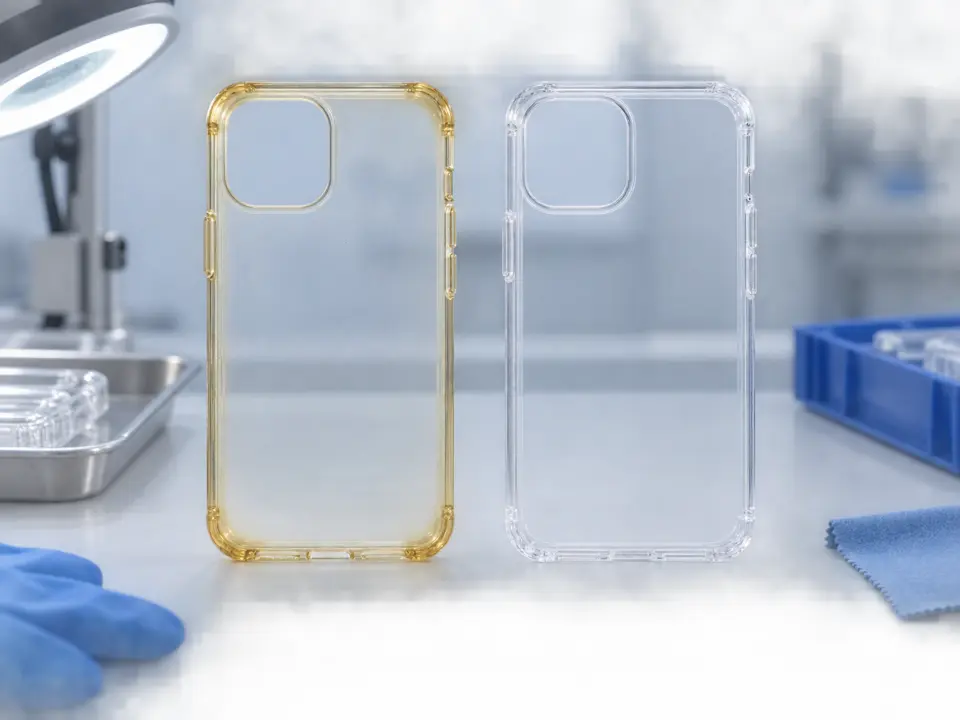
Look at a case against a white background. Is the yellow tint spread evenly through the whole flexible frame? Is it stronger on the side that faces daylight? Or are there darker marks only where fingers touch the edges? Those patterns do not prove a cause, but they help separate a material change from a removable surface stain.
Many clear cases combine materials. A rigid back panel may stay visually clear while its flexible border becomes yellow. That does not automatically mean the back was better made: the parts may use different polymers with different optical behavior. Examine each component before judging the complete case.
Sunlight Can Change the Polymer Itself
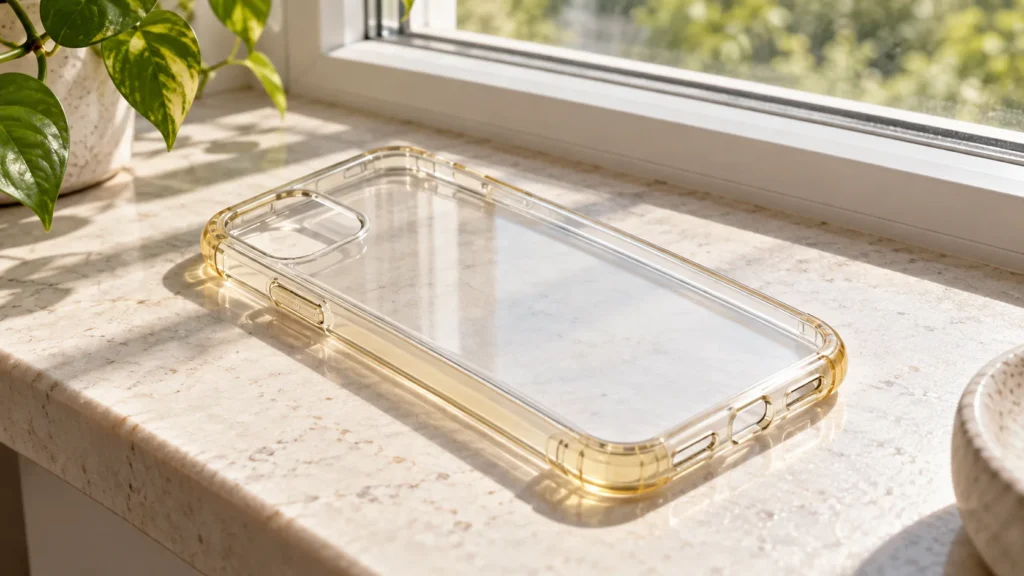
Ultraviolet light can trigger chemical changes in some polyurethane materials. In particular, aromatic TPU can yellow when exposed to UV light. Material supplier Covestro explains that this is related to new light-absorbing structures formed within the material. The change affects how light passes through the TPU, so the once-clear part appears warmer or more amber.
This is different from dirt sitting on top. If the color change is within the polymer, washing the surface cannot reverse it. A case left near a sunny window may make the effect easier to see over time, although everyday exposure varies with location, season, storage, and use.
The term “TPU” alone cannot tell you how quickly a specific case will change. TPU is a broad material family. Its underlying chemistry and selected grade matter, as do any stabilizers and the conditions in which the finished case is used.
Heat, Oxygen, and Daily Handling Add to the Picture
A case also encounters warm pockets, charging sessions, summer car interiors, and ordinary indoor heat. Elevated temperature can accelerate aging processes in some materials. Oxygen is present throughout normal use. The combination of environmental factors makes real-world performance more complicated than one short test under a lamp.
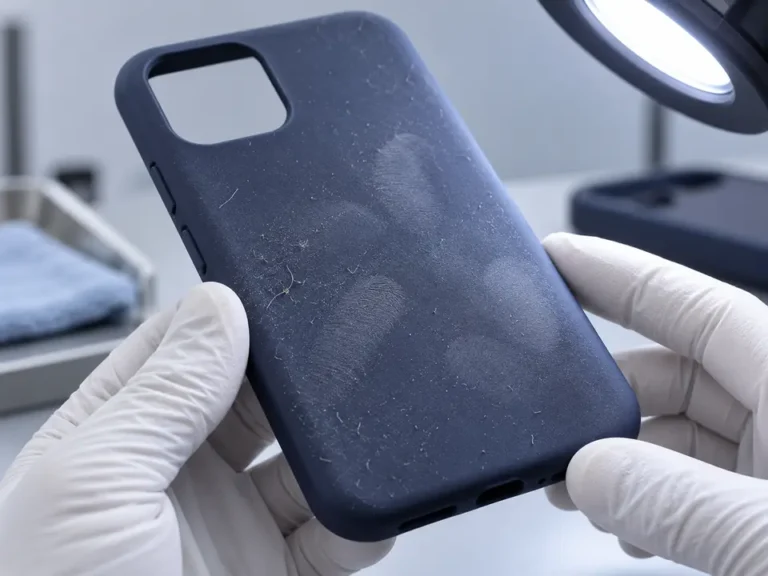
Hands add another variable. Skin oils, lotions, sunscreen, makeup, and sweat can leave residues on a clear surface. Clothing dyes and grime may collect on corners or edges. These marks can make a case look yellow or brown even when the underlying polymer is less changed than it first appears.
Avoid assuming every discolored case has the same defect. If the color is concentrated around grip points, first check for surface contamination. If the entire flexible frame has developed a similar tint, a material-related change becomes more plausible. More than one process can occur on the same case.
Can You Clean a Yellow Case Back to Clear?
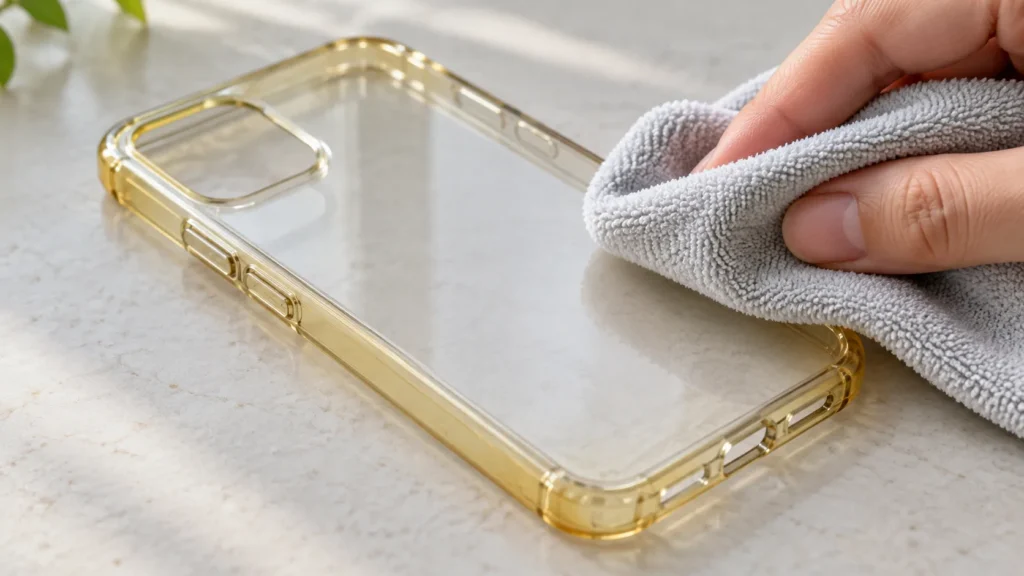
Gentle cleaning can remove some surface residue. Remove the phone first, follow the case maker’s instructions, and use an appropriate soft cloth. Apple advises warm water and mild hand soap for cleaning its silicone and clear iPhone cases. Dry the case as directed before putting it back on the phone.
Cleaning has a limit. Soap cannot restore a polymer whose color has changed internally. Be wary of online tricks involving strong bleach, solvents, abrasive powders, or prolonged heating. These methods may damage the finish, weaken the case, or leave cleaning chemicals where the phone will sit.
After cleaning, inspect the case in natural light against white paper. If the stain has faded, at least part of the problem was on the surface. If the tint remains throughout the material, replacement may be the practical option. A case should also be replaced if its fit, flexibility, or protective structure has deteriorated.
Material Choice Changes the Result
Material suppliers offer different TPU grades for different priorities. Covestro distinguishes between aromatic TPU, which can yellow under UV exposure, and aliphatic TPU grades developed for stronger color stability under UV light. That distinction matters when a customer expects a clear case to retain its appearance.
It is still important to describe a finished product accurately. A raw material’s laboratory properties do not, by themselves, guarantee the color of an assembled case after months of everyday use. Other components, coatings, processing conditions, and contact with stains can affect what the buyer sees.
UV stabilizers may delay yellowing in some formulations, but they do not make every aromatic TPU permanently clear. Buyers should ask what the material is, which part of the case uses it, and what testing supports any “anti-yellowing” claim. A precise claim is more helpful than the vague promise that a clear case will “never turn yellow.”
Test the Complete Case, Not Just a Material Sample
For a wholesale buyer, samples should be compared under consistent conditions. Record each case’s initial appearance, material grade, color, production lot, and packaging date. Then compare how the flexible edge and rigid back respond to relevant light, heat, and handling tests.
A controlled accelerated test can help compare two designs, but it is not a universal calendar. A specified number of hours in a test chamber does not automatically translate into an exact number of months in every customer’s pocket. Ask for the test method, the conditions, and how the change in color was measured.
Check cases from more than one production batch when possible. A well-performing approval sample matters only if later orders use the same specified materials and process controls. Keep a reference sample so changes in clarity can be assessed against something more reliable than memory.
Set Expectations That Customers Can Trust
A clear case is chosen for its appearance as well as its protection. Consumers can help preserve that appearance by keeping it clean and avoiding prolonged heat and direct sunlight. They should also recognize when a lasting tint is part of the material rather than something that can be scrubbed away.
For brands and suppliers, the better response is careful material selection, testing of the finished case, and honest wording about performance. Explain whether the back and frame use different materials. State what was tested and avoid treating “TPU” as a complete quality specification.
Yellowing is visible, but the reason behind it is not always obvious. Separate surface stains from changes inside the polymer, examine the conditions of use, and compare the material grade before drawing conclusions. That approach leads to clearer products and clearer answers for the people who use them.