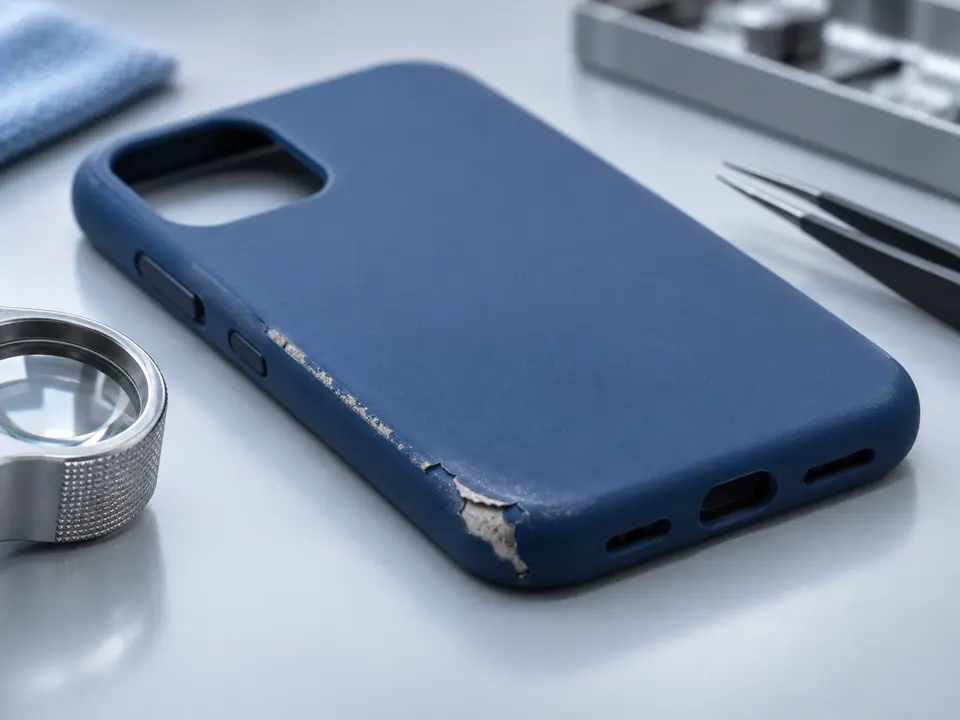
Why Coatings Peel or Fade
A phone case may look perfect when it leaves the box. Its color is even, its surface feels smooth, and its printed design is sharp. A few months later, a corner starts to peel or the color looks dull where fingers usually rest. What changed?
“Peeling” and “fading” describe different problems. Peeling means a surface layer is separating from the material beneath it. Fading means the visible color or finish has changed, even if the layer remains attached. A case can experience either problem or both. Understanding the difference makes it easier to investigate the cause and choose a more durable finish.
A Coating Must Bond to the Surface Beneath It
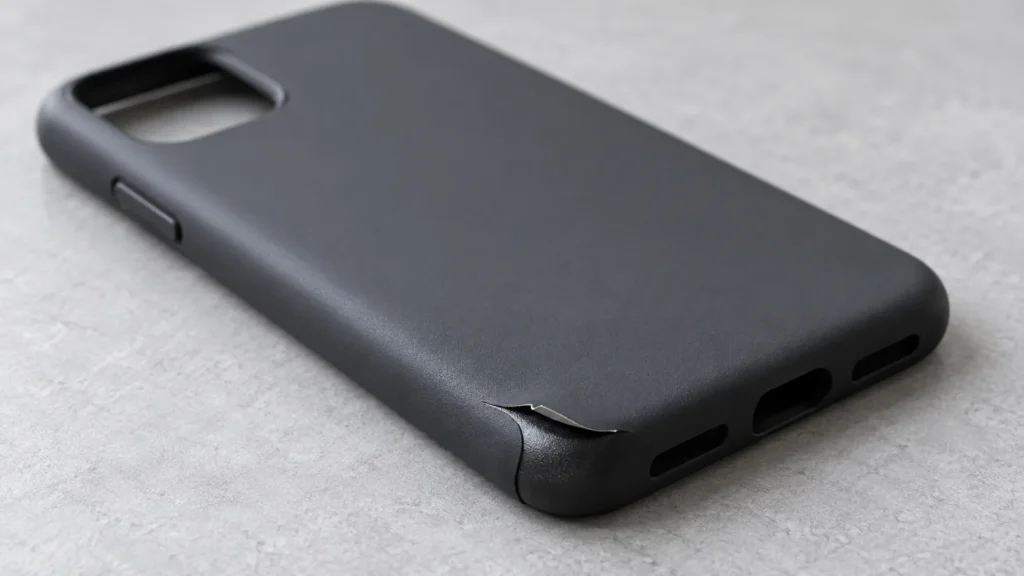
Many decorated cases have several layers: a molded plastic body, perhaps an ink or color layer, and sometimes a clear protective finish. The outer appearance depends on how well those layers work together. If the bond between two layers is weak, ordinary handling may reveal an edge that lifts or flakes.
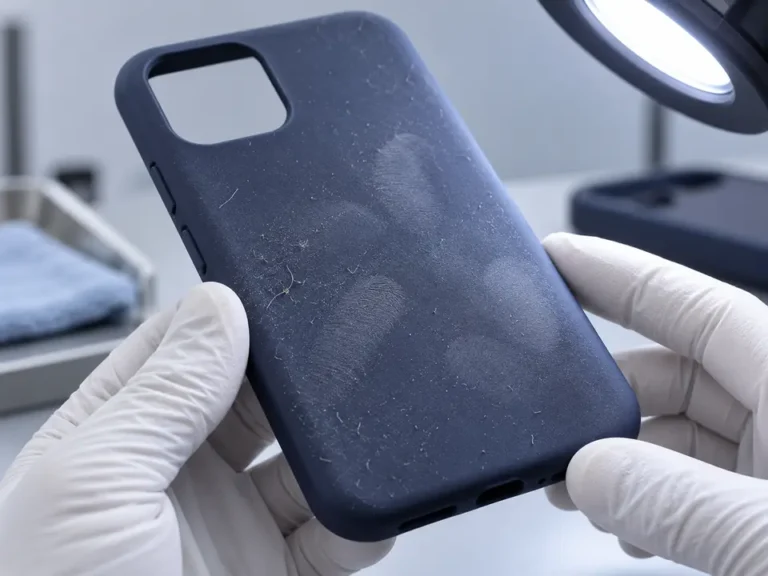
The surface of the case needs to be suitable for the coating process. Dust, oil, molding residues, or other contamination can interfere with adhesion. The chemistry of the base material also matters: a coating that performs well on one plastic may not attach in the same way to a different one.
For buyers, the lesson is to ask about the actual material and finished construction. The phrase “protective coating” does not say what it is attached to or how the bond was checked. A coated rigid back panel and a flexible printed sidewall face different stresses, even when they share the same color.
Preparation and Curing Shape the Result
Production conditions can affect whether a coating stays in place. A case may need cleaning or another suitable surface preparation step before decoration. The coating then needs to be applied and dried or cured according to its formulation and the supplier’s instructions.
An attractive surface straight after production is not proof of a durable bond. A finish applied over contamination may look smooth until the case is handled repeatedly. A layer that has not reached its intended cure may remain vulnerable to rubbing or contact with other items during packing.
This is a process question, not something a buyer can diagnose from one photograph. When a batch begins to peel, compare the affected areas, production dates, base materials, and finishing records. If the same problem appears at the same edge on many cases, the pattern can point toward a repeatable process or design issue.
Flexible Areas Put Coatings Under Extra Stress
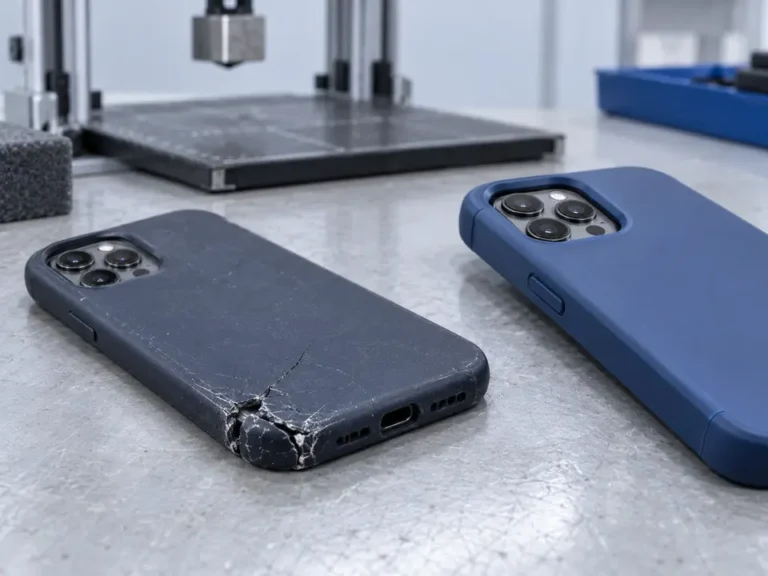
Phone cases are bent during installation and removal. Flexible sidewalls stretch around the phone, while corners take repeated pressure when users grip the device. A surface layer on those areas must move with the base material. If it cannot, tiny cracks can grow and eventually become visible peeling.
The boundary between a rigid back and flexible edge deserves particular attention. Different parts may move differently when the case is twisted. A decorative layer spanning that boundary can be stressed whenever the case is removed. Raised printed details can also catch on a pocket or bag and start lifting at an exposed edge.
That is why a bend test using the finished case matters. Check the print or coating after realistic installation cycles, not just while the case lies flat. A case designed to be easy to remove should keep its finish intact through ordinary removal as well.
Fading Has a Different Set of Causes

Color can change without any layer coming loose. Sunlight may affect some pigments, dyes, binders, or clear finishes. Heat and environmental exposure can alter the way a surface reflects light, changing the apparent shade or gloss. A matte finish that becomes shiny where fingers touch may look faded even if its pigment has not disappeared.
Everyday abrasion adds to the effect. A phone repeatedly sliding across a desk or rubbing against a pocket can wear high-contact areas. Dark colors may show light scuffs; a vivid print may become less sharp at its edges. Some marks come from transferred dye or grime rather than a loss of the original color.
Compare an exposed surface with a protected area near the camera opening. Is the shade different, or just the gloss? Does gentle cleaning improve it? Those observations help separate staining, wear, and light-related color change. They are useful clues, though a precise material cause requires closer evaluation.
Cleaning Can Help Some Marks and Harm Some Finishes
Start with the care instructions for the specific case. A soft cloth and gentle cleaning may remove skin oils or dirt that make the finish look dull. Remove the phone first and allow the case to dry as directed before reinstalling it.
Avoid treating every mark with a strong solvent, abrasive pad, or aggressive scrubbing. These can damage a coating that was otherwise intact, strip a printed design, or change its gloss. If a layer is already peeling, rubbing harder is likely to enlarge the damaged area rather than restore the original finish.
If the appearance changes immediately after cleaning, note which product and method were used. This information can help the seller or supplier investigate a complaint. A fading claim is hard to assess when the case’s cleaning history is unknown.
Test the Finished Case for the Right Risks
Testing needs to match the design and intended use. Adhesion checks can help show whether a coating remains attached to its substrate. Repeated handling, installation, abrasion, and relevant light exposure can reveal different weaknesses. No single test describes the whole customer experience.
Established coating test methods exist, including tape-based adhesion methods published by ASTM. The method and its interpretation need to suit the particular coating and substrate; a result should not be quoted without explaining how the sample was prepared and evaluated.
For wholesale orders, keep an approved reference sample and compare it with finished cases from production batches. Record the base material, ink or coating system, color, production lot, and test conditions. If one color or graphic fails while others do not, that difference can help focus the investigation.
Better Questions Lead to Better Finishes
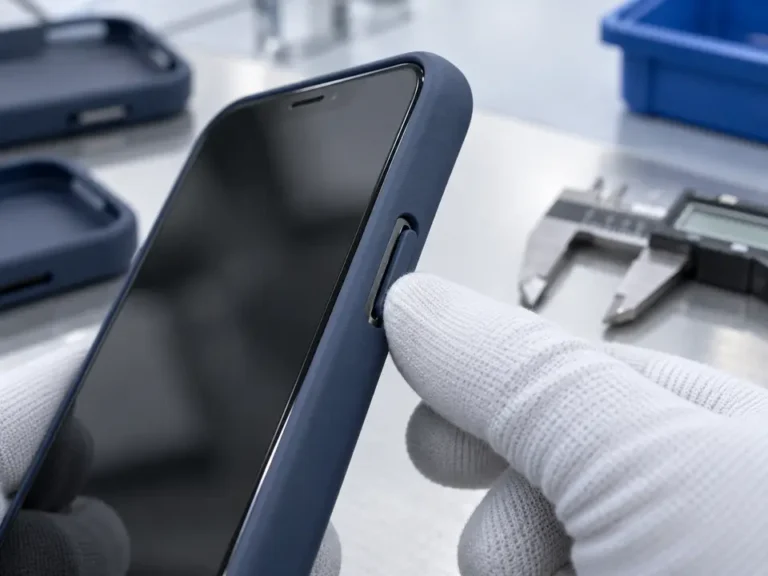
When comparing phone cases, inspect more than the front-facing product image. Look at corners, button areas, camera cutouts, and the junction between materials. Gently flex the case as it would flex during installation. Check whether the design remains attached and whether high-contact areas retain their intended look after repeated use.
Ask a supplier what is printed, what is coated, which parts are flexible, and what checks were performed on the finished case. Claims such as “scratch resistant” or “fade resistant” are more useful when paired with a stated test method and realistic expectations.
A durable finish begins with a suitable material and a coating process designed for it. It also needs to survive the way a phone case is actually held, bent, cleaned, and carried. When a layer peels or a color fades, identifying which of those demands caused the change is the first step toward making the next case better.