When Stands or Magnets Fail
When Stands or Magnets Fail
A phone case with a stand or magnetic attachment promises convenience. You can prop up a video call, set the phone on a desk, or attach it to a compatible charger without searching for the right position. But when the stand slowly folds under the phone’s weight or a charger slips out of place, a useful feature becomes a source of frustration.
These failures do not always have the same cause. A stand may be strong but poorly anchored to the case. A magnetic ring may hold an accessory yet sit out of line with the phone’s charging coil. Understanding the whole design helps buyers identify what went wrong and choose a case that performs reliably over time.
A Stand Needs More Than a Strong Hinge
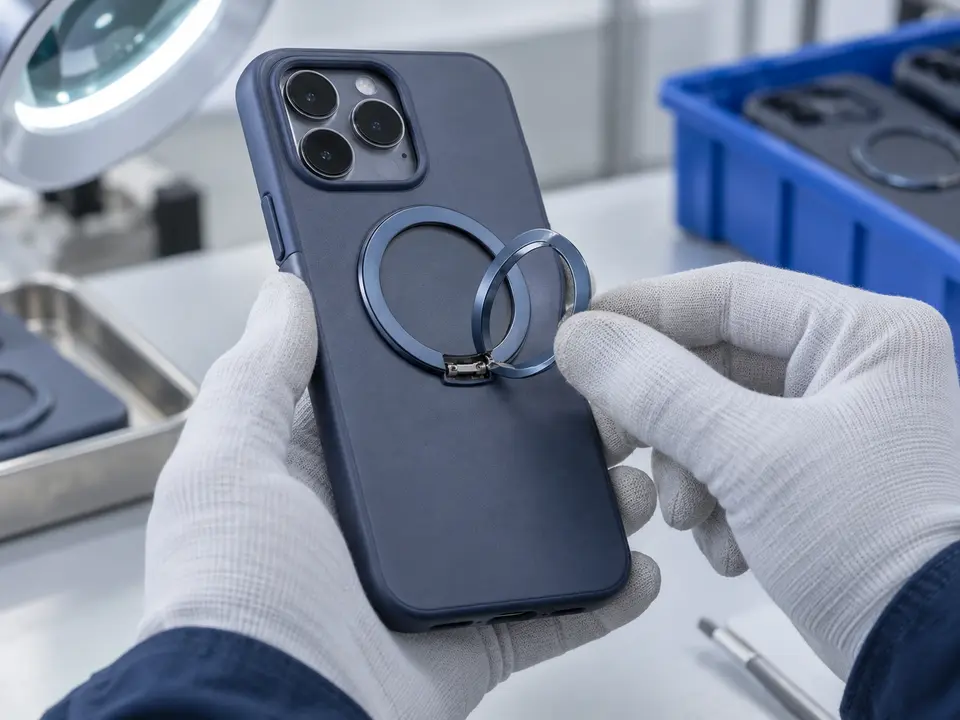
Most built-in stands rely on a hinge, a rotating joint, or a folding ring. The joint must be firm enough to support the phone at its intended viewing angles and smooth enough to move without excessive force. If it is too loose, the phone can tip backward. If it is too stiff, users may put extra stress on the stand every time they open it.
The hinge is only one part of the structure. A stand attached to a thin or flexible back panel can wobble even when the hinge itself feels solid. The phone’s weight travels through the joint into the mounting area and then into the case. If that mounting area bends or begins to separate, the stand may no longer hold the phone securely.
Orientation matters as well. A design that works well in landscape mode may struggle in portrait mode, especially with a large phone. The useful question is not whether the stand opens, but whether the complete phone and case remain stable on an ordinary desk at the angles people actually use.
Repeated Use Reveals Weak Points
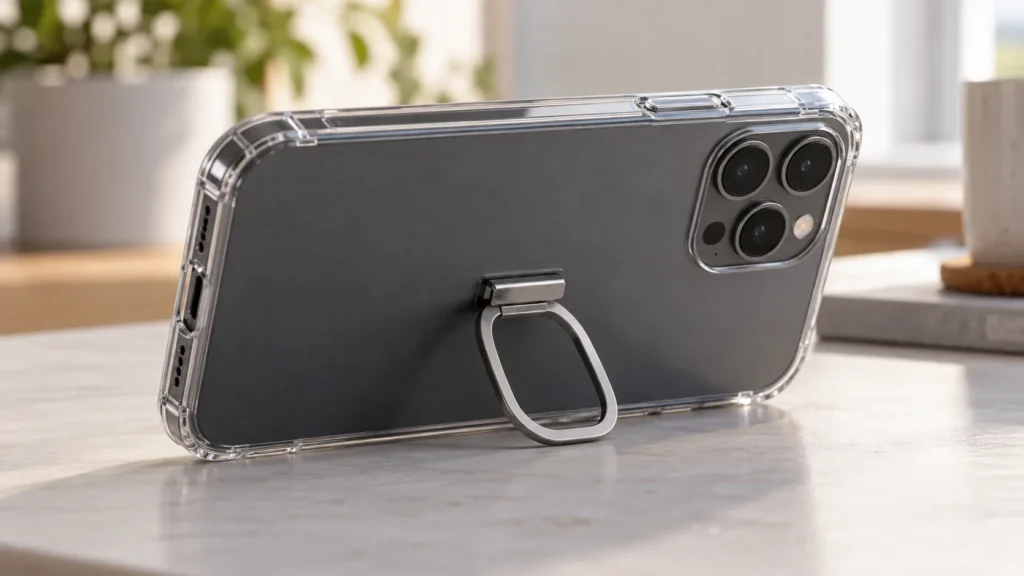
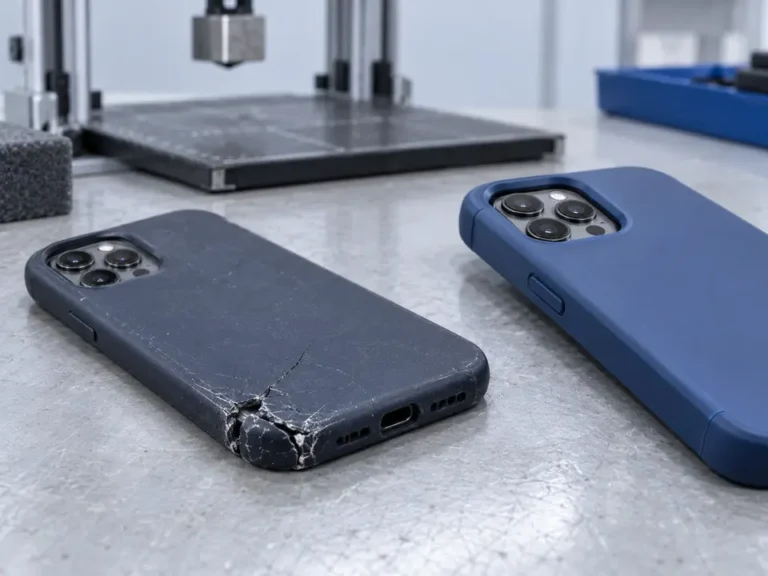
A new stand can feel reassuring in a product video. Months of opening, closing, turning, and carrying it in a pocket provide a different test. Friction surfaces can wear, a joint can loosen, and a small gap can grow around the mounting point. An exposed metal edge may also catch on fabric or other items.
This is why a stand should be checked through repeated-use testing, not just a single demonstration. Open and close it many times, then test it again with the phone installed. Check for movement where the stand joins the back panel. Watch whether it still holds the same viewing angle or begins to collapse gradually.
For users, a change in feel is a useful warning. If the stand suddenly becomes much easier to rotate, clicks differently, or sits unevenly when closed, inspect it. A damaged support should not be trusted to hold the phone above a hard floor or beside the edge of a table.
Magnetic Strength Depends on the Whole Assembly
A magnetic case may use a ring of magnets to connect with a charger, stand, or other compatible accessory. What the user feels as “strong” or “weak” is the result of more than the magnet’s material grade. Magnet arrangement, polarity, distance, accessory design, and the thickness of material between the magnets all affect the connection.
Imagine two cases using similar magnets. In one, the magnets sit close to the exterior and are positioned correctly. In the other, a thick decorative layer separates them from the accessory. The second case may feel less secure in use even if the magnet specification sounds impressive on paper.
Attachment also depends on the direction of force. An accessory that takes effort to pull straight away from a case may still slide when the phone is bumped sideways. A car mount adds motion and vibration that a charger resting on a desk does not. Buyers should therefore ask which accessories were tested and under what conditions rather than relying on a single magnetic-strength claim.
Alignment Matters as Much as Attachment
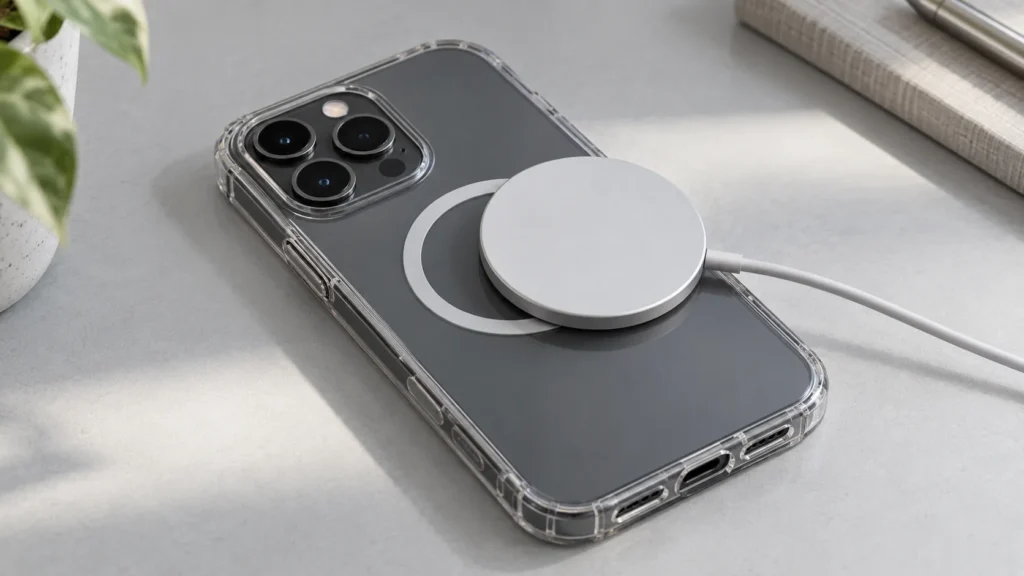
Magnetic wireless charging relies on accurate positioning between the device and charger. The Wireless Power Consortium explains that Qi2 magnetic attachment is designed to align devices and chargers, improving ease of use and energy efficiency. If a case’s magnetic ring is poorly positioned for the specific phone model, a charger may appear attached without sitting where it needs to.
A badly aligned case may lead users to repeatedly adjust the charger, notice interrupted charging, or find that the phone charges more slowly than expected. These symptoms have several possible causes, including the charger, power adapter, phone, temperature, and case. Comparing performance with and without the case can help narrow the problem down.
Do not assume that the strongest-feeling magnetic snap guarantees the best charging. Holding force and charging alignment are related design goals, but they are not identical. A reliable case needs the correct placement for the device as well as a stable connection to the intended accessory.
What Goes Wrong Inside the Case?
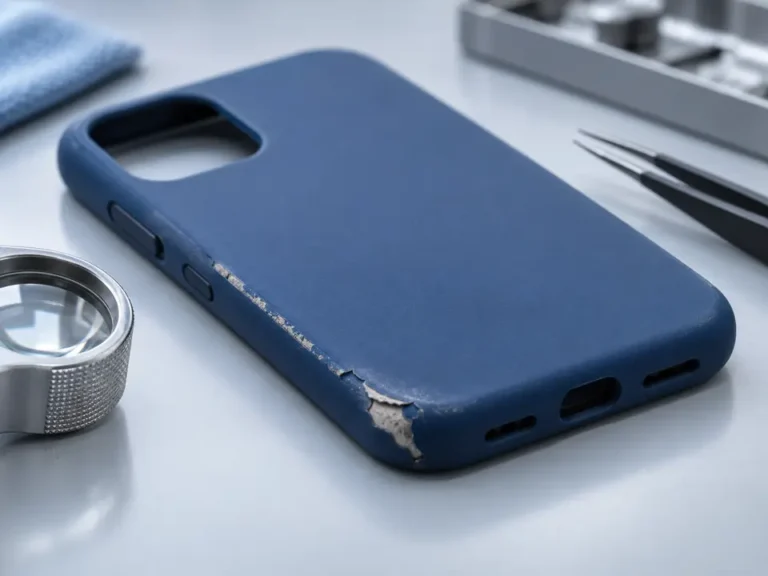
The magnetic parts need to stay where the designer placed them. If a ring shifts within its recess, the position changes and a formerly dependable accessory may start slipping or attaching unevenly. If a covering layer peels away, the magnet assembly may become exposed or feel rough against the user’s hand.
Construction quality matters at the boundaries between materials. The case back, magnetic assembly, adhesive or mechanical retention, and any integrated stand must work together. A failure at one boundary can make the entire feature unreliable even when the individual parts remain intact.
Users can inspect a case for a raised ring, new rattling, gaps, or a stand that no longer sits flush. Stop using an accessory if a magnet or metal part comes loose. Avoid trying to glue a detached part back into an uncertain position: a small placement error can affect fit and charging behavior.
Test Features the Way Customers Actually Use Them
For a buyer comparing samples, a useful evaluation starts with the complete phone and case. Fit the correct phone model and test the stand in portrait and landscape on a flat surface. Try the viewing angles most customers will use. Repeat the movement enough times to see whether the joint changes noticeably.
Next, test magnetic attachment with the accessories intended for the product. Observe whether the accessory lands in a consistent position and whether it remains stable during ordinary handling. If wireless charging is part of the claim, check charging with a compatible charger and suitable power supply, then compare the result with the case removed. Record the phone model and test setup so results can be repeated.
Look at finished samples from more than one production batch when possible. A sample that performs well should be matched by the cases shipped later. Consistent positioning and assembly are just as important as an attractive design.
Choose Clear Claims and Durable Design
A good stand or magnetic case should make everyday use easier without demanding constant adjustment. Buyers should look for a stable mounting area, a joint that keeps its intended resistance, secure magnet retention, and alignment appropriate to the exact phone model.
For brands and suppliers, specific descriptions build trust. Explain which stand positions are supported, which accessories were checked, and how repeated use was evaluated. A magnet grade alone cannot describe how the finished case will perform. Likewise, a photograph of a phone standing upright cannot show whether the hinge stays firm after regular use.
When a stand folds or an accessory slips, the problem is worth tracing to its source. The answer may lie in the joint, mounting structure, magnet layout, material thickness, or assembly consistency. Fixing that part of the design is what turns a convenient-looking feature into one customers can keep using.