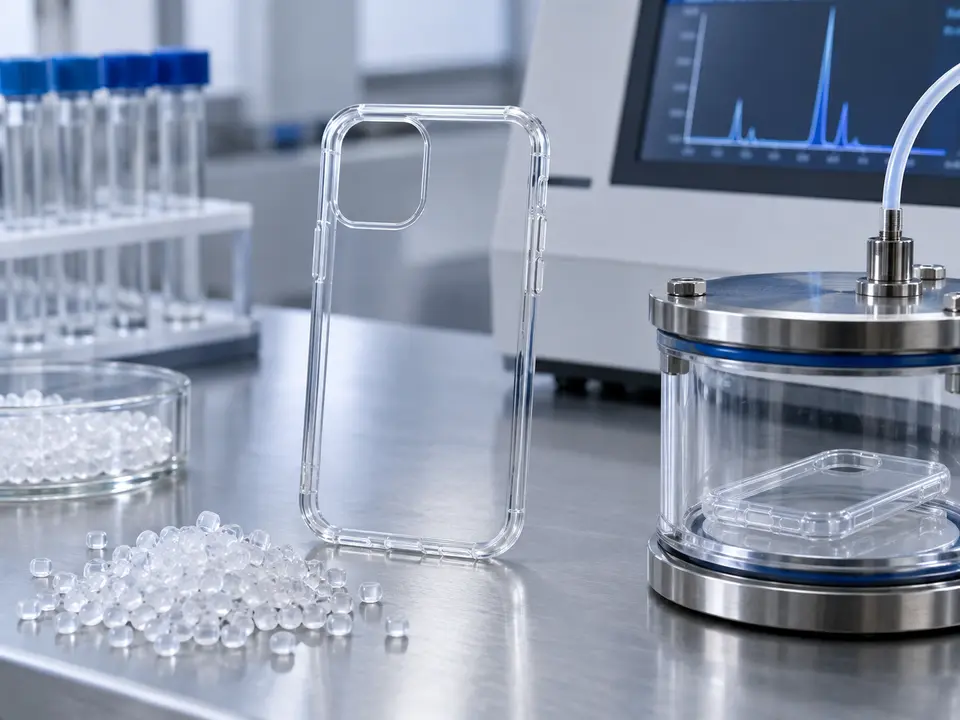
Where Chemical Odors Come From
Where Chemical Odors Come From
Open a new phone case and you may notice a sharp, sweet, rubbery, or paint-like smell. Sometimes it fades quickly. Sometimes it lingers long enough to make a buyer question the product. Where does that odor come from, and what does it actually tell you?
A phone case is rarely just one substance. Its body may be made from TPU, silicone, or polycarbonate. It may also include colorants, surface coatings, printed graphics, adhesives, and packaging. Each stage can affect the way the finished case smells. Understanding the source is more useful than assuming that all plastic smells are the same.
The Base Material Is Only the Beginning
The first place to look is the material used to form the case. Different polymers have different compositions and manufacturing histories. A new TPU frame, a silicone cover, and a rigid polycarbonate back panel will not necessarily have the same odor, even if they are molded in the same factory.
The grade and handling of the raw material matter as much as the material name. A label saying “TPU” describes a broad family, not a single fixed recipe. Suppliers may use different formulations to achieve flexibility, clarity, color, or processing performance. Small amounts of residual substances or additives can influence how a finished product smells.
Storage conditions also deserve attention. Material stored near strong-smelling substances can pick up an unwanted odor. Poor handling can introduce contamination before molding even starts. For a manufacturer or wholesale buyer, traceable raw materials and consistent incoming inspections help narrow down problems when one batch smells different from another.
Heat and Processing Can Change the Smell
To make a phone case, raw materials are heated and shaped. Temperature, residence time, and processing conditions need to match the material being used. If a material is processed outside its intended range, the appearance, mechanical properties, and odor of the finished part may change.
This does not mean every noticeable smell proves that the plastic was overheated. A fresh product can have an odor even when processing was controlled. The point is that a repeatable, unusually strong smell is worth investigating alongside production records and the physical condition of the case.
Look for patterns. Does the smell occur in every color or only one? Is it present in the unprinted case, or does it appear after decoration? Does it affect one production lot? Those questions lead to a more useful answer than simply placing every finished case near an open window and hoping the problem disappears.
Inks, Coatings, and Adhesives Add More Possibilities
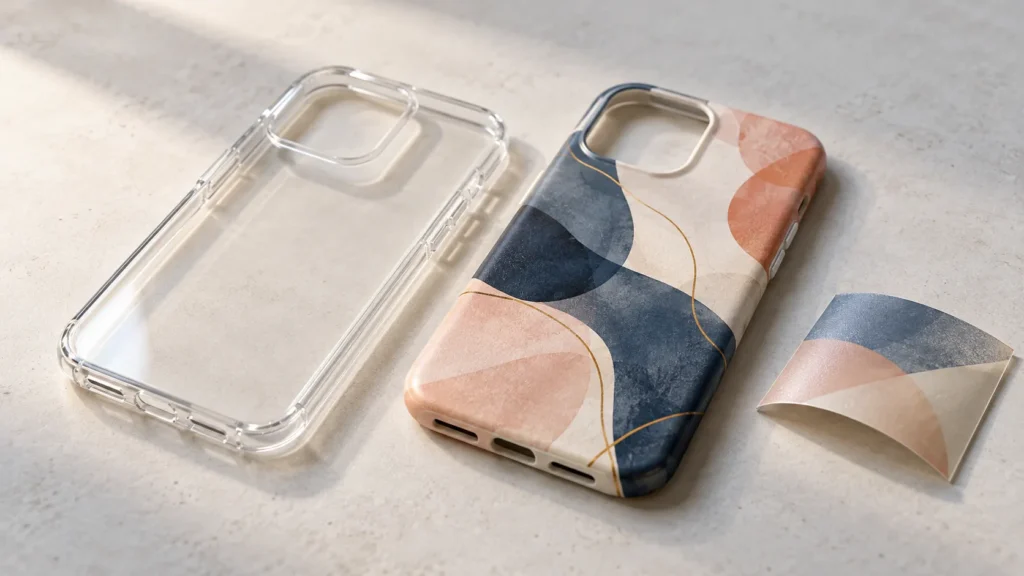
Printed phone cases often involve several finishing steps. Graphics may be applied with inks, and a coating may be added for a particular look or feel. Multi-part designs may use adhesives to attach components. Each process introduces its own materials and drying or curing requirements.
If a decorative case smells noticeably different from an otherwise identical plain case, the finishing process is a sensible place to investigate. An incompletely dried coating, excess adhesive, or a change in an ink formulation could contribute to a lingering odor. The specific cause cannot be confirmed by smell alone; it requires checking the materials and process used for that batch.
Good production practice includes following the supplier’s instructions for application, curing, and handling. It also means allowing the product to reach the appropriate condition before sealing it in its final package. A beautiful printed surface is not enough if the customer opens the box and immediately notices an unpleasant smell.
Sealed Packaging Can Make a Mild Odor Seem Strong
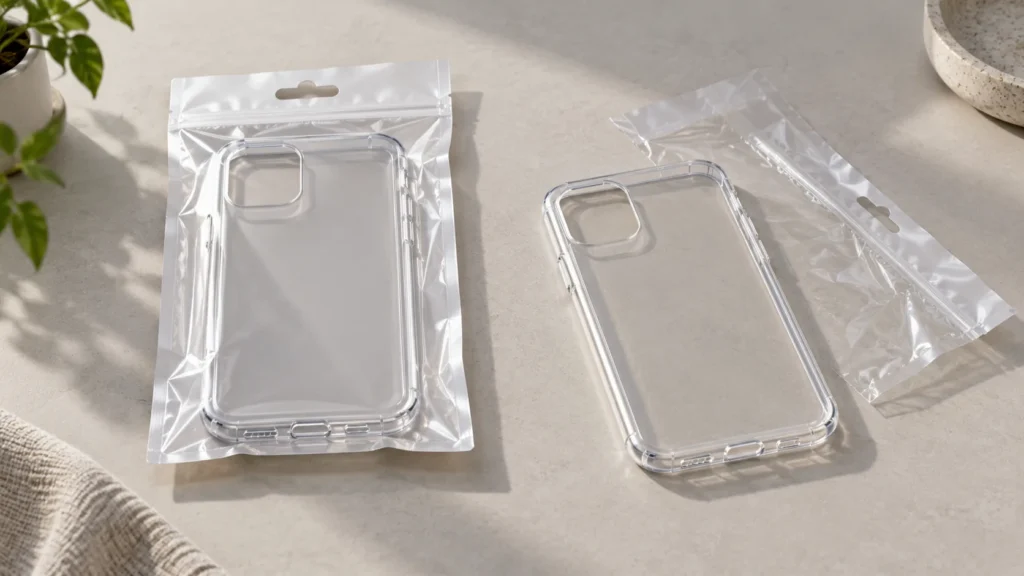
Packaging does not necessarily create the odor, but it can change how noticeable it is. A newly finished case sealed in a small plastic bag has limited opportunity for airborne compounds to disperse. When the bag is opened, the first breath of air may carry a concentrated smell.
That explains why a case can seem strongest immediately after opening and less noticeable later. It does not, by itself, identify the substance responsible or establish whether a product meets a safety requirement. Packaging films, printed boxes, and inserts may also have odors of their own, so the smell from the package should be separated from the smell of the case.
For quality checks, compare a case straight from its sealed bag with an identical case stored separately under controlled conditions. Smell the empty packaging as well. That simple comparison can point a supplier toward the part of the process that needs closer examination.
A Smell Is a Clue, Not a Safety Test
Our noses are sensitive to some substances at very low levels and less sensitive to others. A strong odor does not automatically prove that a phone case is unsafe. The absence of a smell does not prove that every chemical concern has been ruled out, either.
Health and compliance questions require more than a sniff test. They depend on which substances are present, their amounts, how a person may be exposed, and the requirements of the market where the product will be sold. Broad claims such as “odorless,” “non-toxic,” or “VOC-free” should be backed by evidence appropriate to the claim.
Testing can help answer more specific questions. Depending on the product and destination market, a buyer might request material information, applicable chemical compliance reports, or an emissions assessment. An independent laboratory can investigate particular compounds when there is a persistent complaint. Clear documentation is much more useful than guessing what a smell means.
What Should You Do With a Smelly New Case?
If a newly opened case has a mild odor, remove it from its packaging and leave it in a clean, well-ventilated place, away from direct heat and sunlight. Check the maker’s care instructions before cleaning it. Wiping the surface as directed may remove residues left from handling or packaging.
Do not try to mask a strong odor with perfume, harsh solvents, or excessive heat. Those steps can damage the case and make it harder to identify the original problem. If the smell remains strong, changes unexpectedly, or causes discomfort during use, stop using the case and contact the seller. Keep the packaging and order details so the supplier can identify the batch.
For wholesale buyers, one complaint is a reason to document the product, color, lot, packaging, and time since opening. Several similar complaints from the same lot justify a broader investigation. Compare samples from different production stages rather than assuming the raw polymer is always to blame.
Better Odor Control Starts Before the Box Is Sealed
Reducing unwanted smells is a manufacturing and quality-control task. It begins with choosing appropriate, consistent raw materials. It continues through controlled processing, properly managed printing and bonding, clean storage, and checks before packaging. Each step provides an opportunity to catch a problem before products reach customers.
Buyers can ask practical questions: What material grade is used? Are inks or adhesives part of the design? How are finished cases checked? Can the supplier provide relevant test documentation for the destination market? Answers should describe the actual product and process, not rely on a generic promise that all phone cases are the same.
The next time a case smells “chemical,” treat that observation as the start of an investigation. The source could be the polymer, a finishing material, the packaging, or a combination of them. Finding out which one is responsible takes process knowledge and, where needed, testing. That is how a noticeable odor becomes a problem a supplier can understand and address.