
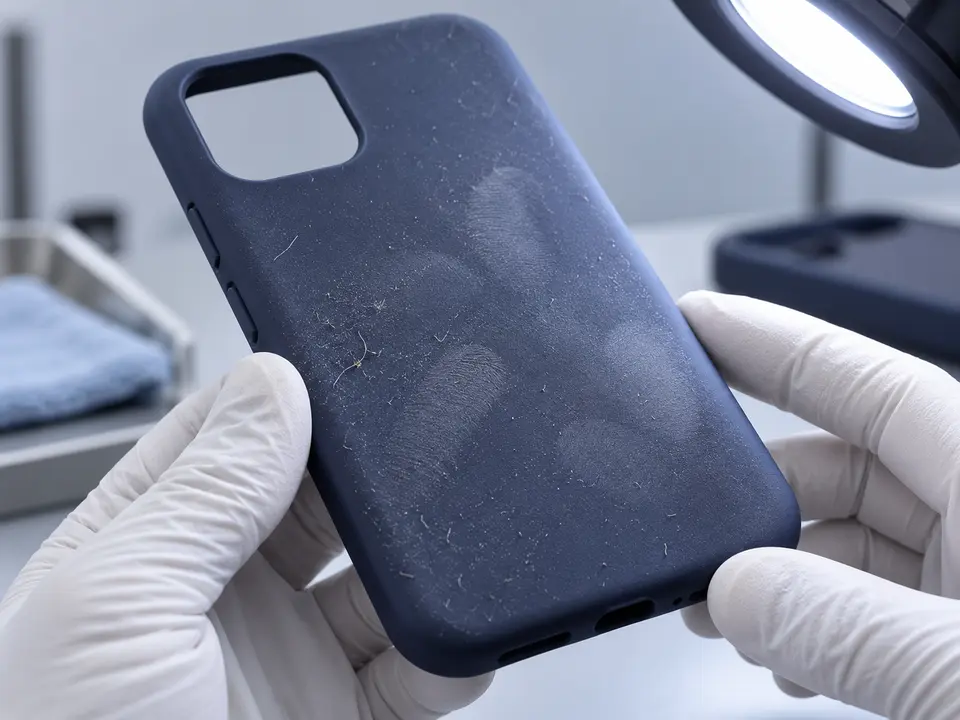
Why Cases Harden or Crack
A phone case can feel flexible when new, then become stiff or develop a fine split months later. You might not notice until a corner no longer hugs the phone or a crack appears beside the charging port. Material aging, repeated bending, and a hard impact can cause similar looking damage. Understanding the difference helps you recognize when the case can no longer protect your phone reliably.
Start With the Material, Not the Label
“Soft case” describes a feel, not one recipe. Flexible phone cases may use thermoplastic polyurethane (TPU), silicone, or combinations of soft and rigid materials. Some cases have a hard polycarbonate shell with a flexible bumper. Each material family has different strengths, and even two TPU formulations can respond differently to sunlight, moisture, heat, and repeated bending.
A rigid shell may crack at a corner after a drop. A flexible bumper may lose elasticity and split where it stretches around the phone. Silicone can remain supple under conditions that trouble another material, though formulation and design still matter. There is no reliable lifespan for every case.
Temperature changes how a case feels. A case that seems firmer in the cold may soften again indoors. Permanent hardening persists at room temperature, sometimes alongside whitening, fine cracks, or a loss of fit.
Sunlight, Heat, and Moisture Can Speed Up Aging
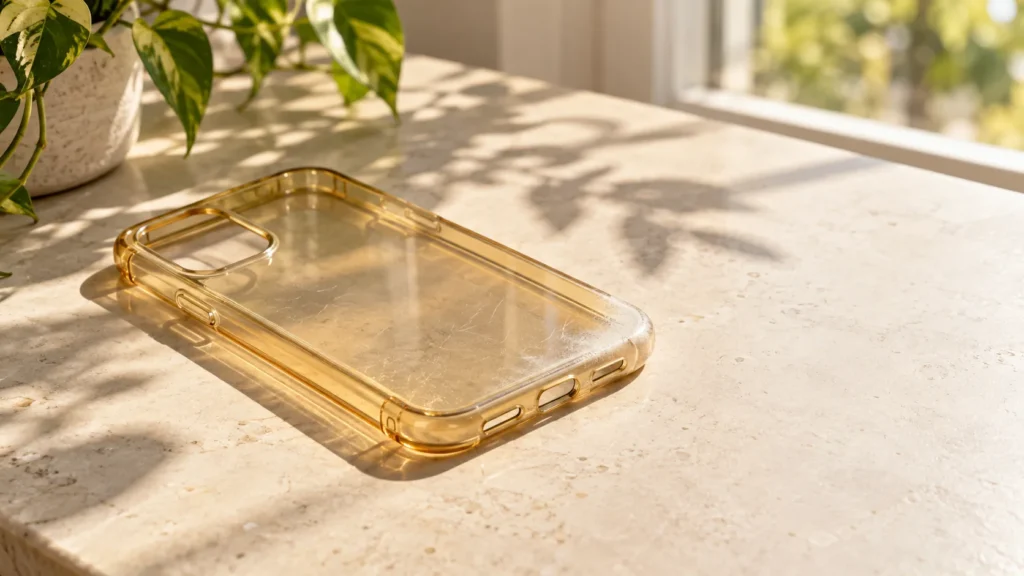
Leaving a phone on a sunny dashboard exposes its case to light and heat at the same time. Ultraviolet light and oxygen can alter susceptible polymers near the surface, while sustained warmth can accelerate changes already taking place. On some polyurethane materials, that damage may show up as a brittle outer layer or reduced ability to stretch. The exact result depends on the material formulation; yellowing, hardening, and cracking are possible signs of different changes rather than one universal sequence.
Moisture matters as well. Certain TPU grades resist hydrolysis better than others, and the effects of warm, humid storage depend on the chemistry used. A splash of water does not mean a case is ruined. The more useful question is whether the case regularly experiences prolonged heat, humidity, strong sun, or a combination of them.
Avoid storing your phone in direct sunlight or near a heat source for long periods. After cleaning, let the case and phone dry before reassembly. These habits cannot reverse aging, but they reduce avoidable exposure.
Small Openings Carry a Lot of Stress
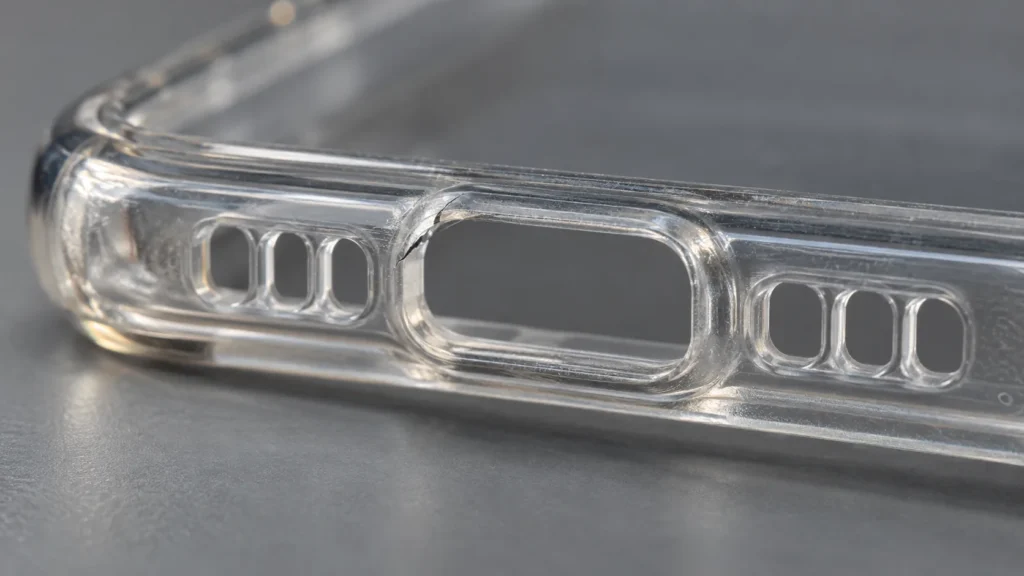
The places most likely to split are often the narrowest: charging port cutouts, button bridges, camera surrounds, and the thin lip over a corner. These areas bend while the case is installed or removed, and they may flex again when a cable is pushed into the port or the phone is dropped. A tiny notch or a sharp inside corner can concentrate force in a smaller area.
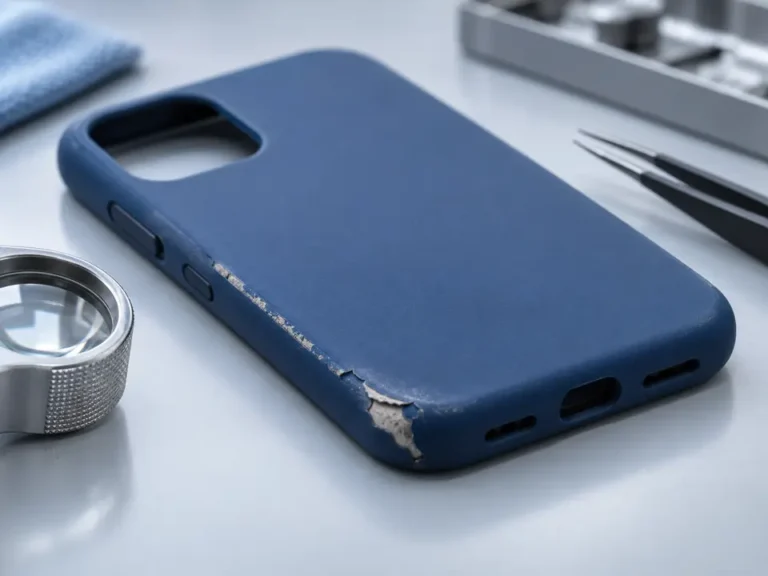
Pulling the same lower corner outward every day stretches it more than the back panel. A white stress mark or tear may develop by the cutout. Even good material can fail if its thinnest section bends too far.
To remove a case, follow any instructions supplied with that model. In general, work the phone out gradually instead of yanking on a narrow strip around the port. A crack at a cutout is a warning that the surrounding lip may no longer hold the device as intended.
A Drop Can Start Damage You Notice Later
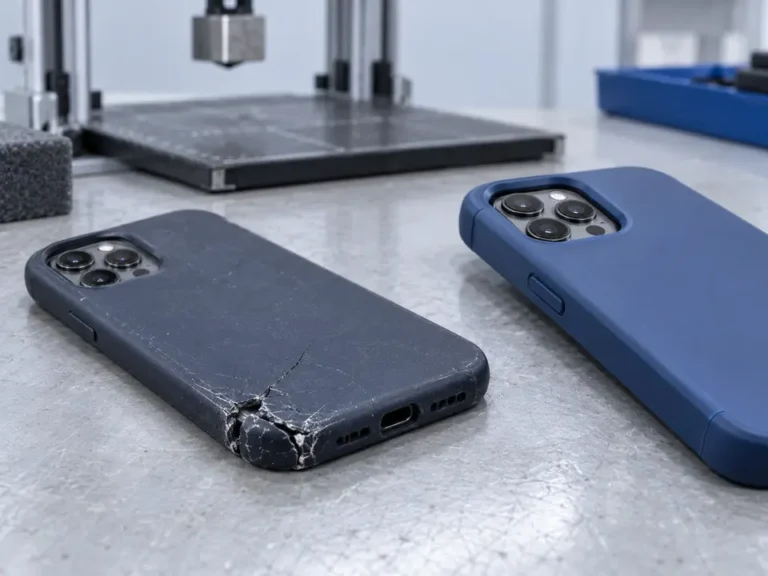
Not every crack is the result of slow aging. A fall can create a hairline fracture in a rigid shell, loosen a bond between layers, or nick a flexible edge. The case may still look usable immediately afterward. Later, ordinary bending can extend that initial damage until it becomes obvious.
Look closely after a significant drop. Check the corners and openings, press lightly around any layered sections, and make sure the case still sits evenly against the phone. A split that opens when you gently move the edge, or a corner that pops away from the device, indicates that the fit has changed. Also check the phone itself; a case can absorb part of an impact without preventing every possible injury to the device.
The causes can overlap: an aged edge may crack more easily on impact, while an earlier impact may leave a weak point that tears later.
Surface Changes Are Clues, but They Need Context
A cloudy patch, whitening near a bend, peeling coating, or persistent tackiness can accompany wear. They do not all mean the same thing. Whitening confined to a stretched corner may indicate local stress. A coating can peel while the structure underneath remains intact. A case that feels slippery or sticky may have a surface problem rather than the stiffness that precedes a crack.
Check its function. Does it hold its shape? Do the buttons work? Does the phone sit securely without a widening gap near the corner? Cosmetic changes are less urgent than a torn lip, loose fit, or exposed edge. Replace a case with a structural split.
Cleaning Will Not Restore Lost Flexibility
Dirt trapped between the case and phone can make an old case look worse, so cleaning is sensible. Remove the case and follow the maker’s cleaning directions. For many simple cases, a soft cloth with mild soap and water is a reasonable starting point, followed by thorough rinsing if appropriate and complete drying. Keep liquid away from the phone’s openings.
Cleaning can remove residue, but it cannot rebuild polymer chains or mend a fractured corner. Avoid trying to soften a stiff case with a hair dryer, hot water, oil, or a strong solvent. Heat may distort its fit; aggressive chemicals may damage the surface or other components. If a case has permanently stiffened, stretched out, or cracked through a protective edge, a replacement is the practical fix.
What Better Durability Testing Should Look For
“Flexible” and “durable” sound reassuring, but tests should match real use. Material makers examine resistance to UV exposure, moisture, and chemicals; designers also need to check the finished case. Raw material tests cannot reveal every weakness created by a thin cutout or bonded seam.
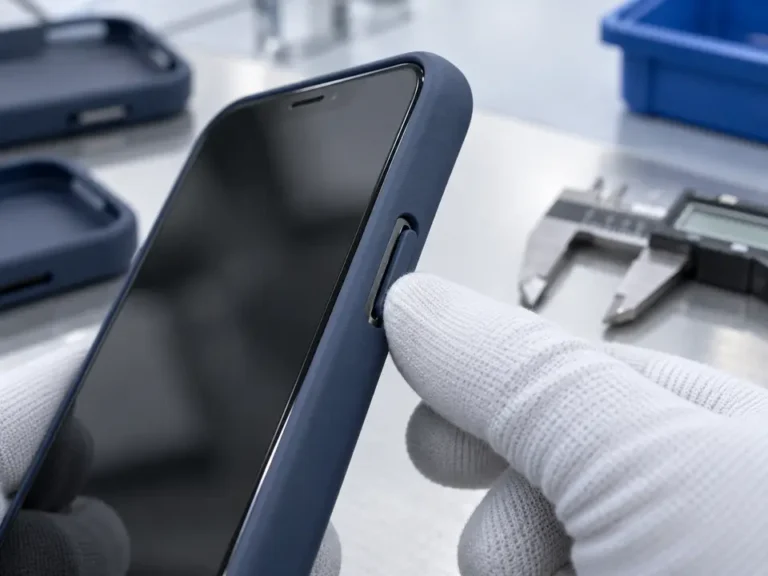
Relevant evaluations could include repeated installation and removal, bending around buttons and ports, exposure to light and warmth, and drop checks both before and after environmental aging. The goal is to see whether the case retains its fit and protective shape, not just whether its surface still looks new. No single test predicts every user’s experience, but clear methods and stated limits make a durability claim more meaningful.
As a buyer, inspect practical details: sufficient material around openings, smooth interior corners rather than obvious sharp notches, and an edge that fits snugly without extreme stretching. If a brand publishes test conditions, read what was actually tested and whether those conditions resemble how you use your phone.
Know When the Case Has Reached Its Limit
A case is a replaceable layer of protection. If a crack runs through a corner or port bridge, if the edge no longer grips the phone, or if a hard bumper can no longer flex enough to install safely, it is time to replace it. A small mark may be harmless; a change in fit is harder to dismiss.
The most useful lesson is to treat hardening and cracking as signals, not mysteries. Material chemistry affects how a case ages. Sun, heat, and humidity influence that process. Design details and repeated bending decide where stress gathers. Regularly checking the corners and cutouts lets you catch a problem while it is still a small one—and choose a sound case before the next drop.



r3231